Free Trial for 120+ Creative Classes
Search & Section Navigation

Shopping
Style NewsTrends & InspoShoes & AccessoriesBest Beauty ProductsHome DecorGift Guides
Self Care
Beauty & Skincare NailsHairMakeupHealthOrganization & CleaningFinancial WellnessA Better Work LifeCreativity & DIY
Celebrity
Celeb StyleRed Carpet Celebrity Couples
Entertainment
TV ShowsMoviesBooksMusic
HOROSCOPES
HoroscopesAsk An AstrologerZodiac Signs
Food
Food News & Menu UpdatesRecipesHealthy EatingAppetizersDessertsCocktails
More
TravelHolidaysRelationships & ParentingGamesBrit + Co PicksSelfmadeDIY ClassesDIY GuidesVideos
Shopping
Self-Care
Celebrity
Entertainment
Horoscopes
Food
Travel
Holidays
Relationships & Parenting
Brit + Co Picks
AboutPressAdvertise With UsClassesCareersContactDo Not Sell My Info
STAY CONNECTED WITH BRIT+CO
You may not know their names, but you've been touched by their legacy.
10 Women Scientists That History Shouldn't Forget
By Kat ArmstrongApr 15, 2019
Kat Armstrong
Kat has been a writer, social media maven and mom for longer than she's willing to admit. She's also spent time in front of and behind the camera, interviewing celebs, politicians and acting as a producer for fashion and artistic photography shoots. When she isn't writing for various orgs and publications, she's hanging with her kids, husband and French Bulldog, Peter, in Toronto, Canada.
Recommended for you
9 Chilling Mystery & Thriller Books to Read Before Fall Ends
Although women are making steady inroads in STEM fields, the science and technology world remains dominated by men. According to the National Girls Collaborative Project, fewer than 30 percent of all science and engineering jobs are held by women. Though that figure is certainly better than it was in the past, we have a long way to go in lifting the barriers to science, tech, engineering, and math education that keep so many women out of those fields.
Throughout history, women have had to overcome obstacles to access education, yet many persisted in STEM nonetheless — despite the fact that their work may not always have gotten recognition (or was outright stolen) by their male colleagues. But it's never too late to give these brave, history-making women their due.
Here are 10 women in STEM who were forgotten by history — until now.
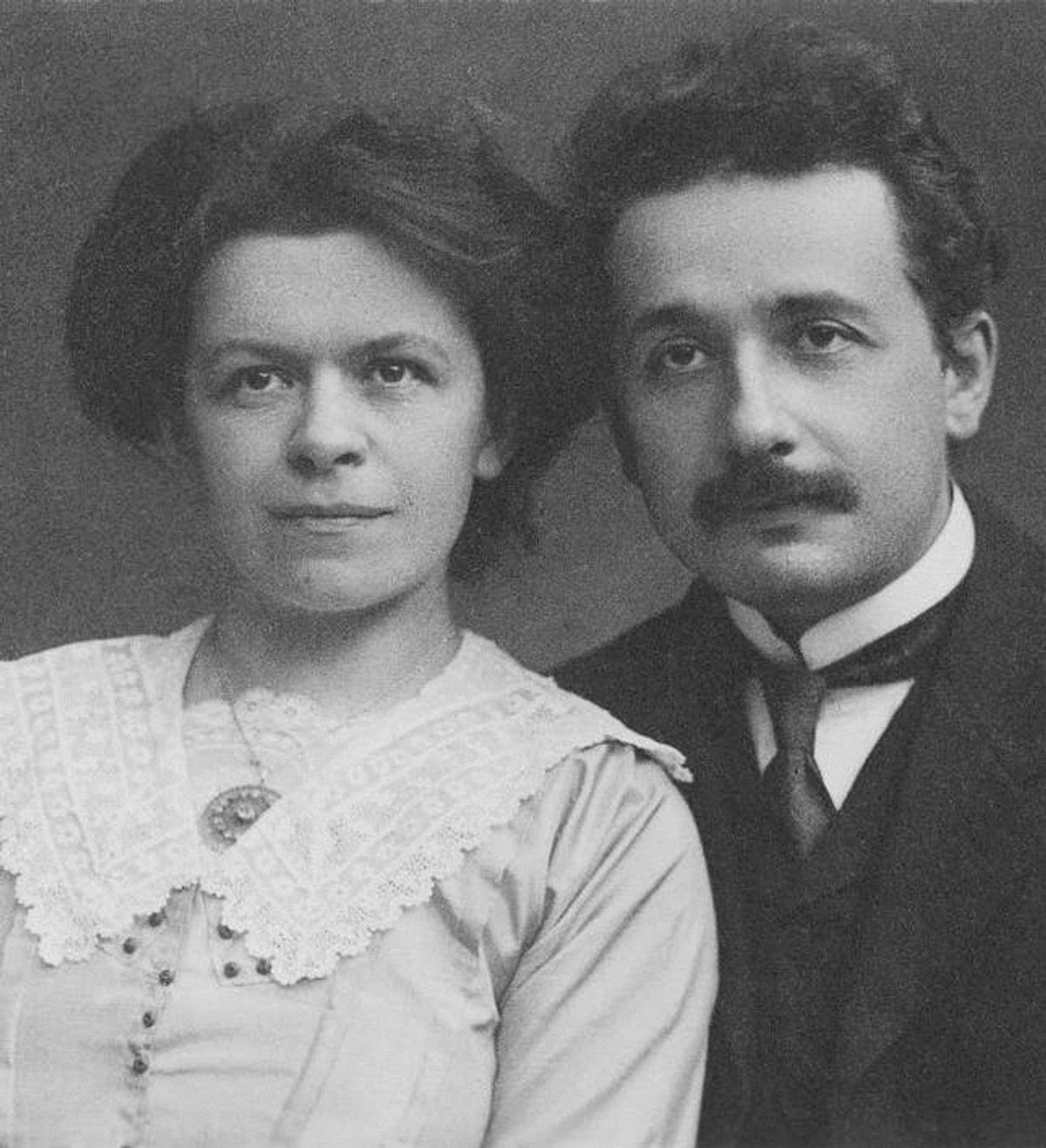
Mivela Maric: Albert Einstein is widely regarded as one of the greatest scientific minds in history, but there has been some recent discussion over the role that his first wife, Mivela Maric, played in his success.
People who debate Maric’s involvement in the development of theories attributed to Einstein tend to fall into two camps. On one side, there are those who argue that she was merely a sounding board for her husband’s ideas; on the other, that she was a direct collaborator in his research and even helped create some of what we now consider Einstein’s greatest theoretical works. What’s not up for debate is that Maric was a fierce intellectual whose input Einstein took seriously.
Based on correspondence between the couple, historians do agree that Maric can be credited with working alongside her husband. (Einstein talks of “our studies” and “our theory” in many of the letters.) Despite her intelligence, by virtue of being a woman in the earlier part of the 20th century, Maric’s work has never been fully evaluated, and her role (however ambiguous) in her husband’s work will never be fully understood. Maric died in 1948, and for years was overlooked as a physicist and merely noted for her relationship to Einstein. (Photo via Wikimedia Commons)

A post shared by The Institute of Physics (@institute_of_physics)
Jocelyn Bell Burnell: The name of British astrophysicist Jocelyn Bell Burnell may not be familiar to you, but her 1967 discovery of pulsars changed astronomy forever.
While still a graduate student at the University of Cambridge, Bell Burnell's research into quasars (enormous celestial bodies that emit huge amounts of energy) led her to stumble onto large neutron stars that act almost as smaller-scale quasars — now known as pulsars.
With her male advisor, Antony Hewish, Bell Burnell co-authored a paper on the revelation that would go on to help scientists study many facets of the universe, including the possibility of alien communication. In 1974, Hewish and physicist Martin Ryle won the Nobel Prize in physics for work made possible by Bell Burnell's discovery. Her name wasn't even included in the award.
Since Bell Burnell's discovery, she has been a teacher and researcher and has headed the Royal Astronomical Society. She also served as the first female president of both the Institute of Physics and The Royal Society of Edinburgh. In 2018, she was awarded a $3 million dollar prize for her work on pulsars, over half a century after she discovered them.
Chien-Shiung Wu: Born in China in 1912, Chien-Shiung Wu attended a school founded by her father in Jiangsu Province. As a child, she encountered a biography of chemist Marie Curie (the first woman to receive a Nobel prize, and the only woman to date to win it twice) that sparked her imagination and drive. Wu's grades in school were so impressive, she was invited to attend the National Central University in Nanjing without having to complete the school's usually mandatory entrance exams.
After graduating in 1934, Wu realized she needed to attend graduate school abroad if she wanted to advance in her field. She achieved her Ph.D. from the University of California at Berkeley in 1940 and went on to teach at Smith and Princeton.
Wu was also involved in the highly secretive Manhattan Project — the US government's scientific race to create atomic weapons ahead of its enemies during the Second World War. Although her work was instrumental in developing the atomic bombs the US used in the Pacific theater, Wu subsequently expressed regret at her role in the bombings of Hiroshima and Nagasaki and shared her wish that atomic warheads never be used again.
After the war, Wu remained at Columbia University in New York, where her research on the decay of atoms brought her work to the attention of two colleagues; in 1954, those colleagues were awarded the Nobel Prize in physics for work that could only be verified through Wu's expertise. Wu's research went uncredited.
Her work did, however, earn other awards and accolades over the years. Wu is credited with helping scientists understand blood molecule changes and sickle cell anemia, and she was the first woman to serve as president of the American Physical Society.
A post shared by Quotes Mind Project (@schrodinger.and.his.cat)
Lise Meitner: Austrian physicist Lise Meitner is sometimes credited as “the mother of the atomic bomb," but the scientist actually refused to work on the Manhattan Project. She reportedly declared, "I will have nothing to do with a bomb!" But her work in nuclear science helped pave the way for future discoveries; much like other women scientists, her name was left off the major awards that resulted.
After achieving her doctorate in the early 1900s, Meitner began a 30-year working relationship with chemist Otto Hahn, in which the two collaboratively studied radioactivity using insights from their respective fields. When Nazi Germany annexed Austria, the Jewish Meitner was forced to flee to Sweden to continue her work; once there, she received no support from the Swedish scientific elite, who were hostile to the idea of a female colleague.
Meitner continued her research in spite of rejection from her peers. Along with Hahn, scientist Fritz Strassmann, and her nephew Otto Frisch, Meitner began new tests on uranium in Copenhagen. Eventually, they were able to develop and prove a theory of nuclear fission. But it was Hahn who, in 1945, was awarded the Nobel Prize for this work.
Although the three other scientists who'd worked with Hahn on the discovery were awarded a different award in 1966, the Nobel “mistake" was never formally clarified.
Rosalind Franklin: Biologist James Watson and physicist Francis Crick solved the riddle of DNA in the 1950s, but they couldn't have done their work without the findings of other scientists; notably Rosalind Franklin. The daughter of English socialites, Franklin was given every educational opportunity. At every turn, she was faced with resistance from colleagues, employers, and even her own father — a would-be scientist, himself, who worried about a woman's place in scientific research.
After graduating from Cambridge, Franklin bounced around between jobs in European laboratories, learning cutting edge X-ray techniques. She eventually took a three-year research scholarship at King's College in London.
Utilizing the radiology techniques she'd learned, Franklin and her lab partner, Maurice Wilkins, took some of the first clear images of DNA structures. The story goes that the pair were having a disagreement when Wilkins, without permission, took his research partner's unpublished work to his friends, Watson and Crick. Franklin's images directly informed the two scientists' first models of DNA structure, yet she was completely uncredited in their published work.
It was only after Franklin's death at the age of 37, from ovarian cancer, that Watson admitted her work had been “crucial" to his and Crick's discovery.
Caroline Herschel: Astronomer Caroline Herschel moved to England from Germany in 1772 to join her brother, William, after the death of their father. While the Herschel patriarch had approved of an education for his daughter, the Herschels' mother insisted Caroline leave school to take up housework after her husband's death.
The brother and sister performed together as a musical duo in England, and it was during this period that William became obsessed with telescopes and astronomy. Caroline soon followed suit.
William discovered the planet Uranus in 1781. When William was appointed Royal Astronomer by King George III in 1782, he took his sister along with him.
Caroline worked alongside her brother, for which King George offered her an annual salary as an astronomer's assistant. She was the first woman to discover an unnamed comet and presented findings to the Royal Society that proved the existence of 560 stars omitted from the British Catalogue, along with a list of errors she found in the publication. Her work was so prolific and thorough that two of her astronomical catalogs are still in use today. (Image via Wikimedia Commons)

Justine Siegemund: Midwifery is as old as human history, but until the mid-1600s, the tricks of the trade were passed down orally from midwife to midwife. Enter Justine Siegemund, a German woman who, after suffering excruciating pain from a midwife’s misdiagnosis, began to study the craft herself. Siegemund became so renowned for her expertise that she was eventually encouraged by Mary II of Orange to write a guide on the subject.
Siegemund’s self-published midwifery book, The Court Midwife, became the first German medical text to be written by a woman. With the aid of illustrations by leading medical engravers, Siegemund shared wisdom on life-saving childbirth methods. She’s considered a pioneer in developing techniques to manually turn a breech baby during labor, and using a needle to break the amniotic sac to avoid hemorrhage in cases of placenta previa. (Image via Wikimedia Commons)

Emily Warren Roebling: If it weren't for Emily Warren Roebling, one of America's most iconic structures might not exist. When her husband, engineer Washington A. Roebling took ill during the building of the Brooklyn Bridge (probably from the bends, a disorder common in bridge-builders and deep-sea divers), Emily stepped in to ensure the bridge would be completed.
Though she was not an engineer by trade, Emily took over her husband's role as foreperson, project manager, and go-to during the bridge's treacherous building. Historians today are generally in agreement that without her involvement, the Brooklyn Bridge as we know it would likely never have been built. And she knew it, too.
“I have more brains, common sense and know-how generally than have any two engineers, civil or uncivil, and but for me the Brooklyn Bridge would never have had the name Roebling in any way connected with it!" Emily Warren Roebling wrote to her son in 1898.
After the bridge was complete, Emily Warren Roebling went on to attain a certificate in business law at a time when women were not typically allowed to enter law school and devoted her life to philanthropy. (Image via Charles Émile Auguste Carolus Duran/Brooklyn Museum for Wikimedia Commons)

Which STEM lady do you want to learn more about? Tell us @BritandCo!
This post has been updated.
The Latest
Sponsored
Meet the Inspiring Founder Behind A New Grief Collective
Aug 26, 2022
Amanda Perna Left Calvin Klein For Sequins & Feathers. She Has No Regrets.
Nov 10, 2026
This Life-Changing Hack Relieved My Mental Load For Good
Apr 13, 2026
Nebula Reviews: Psychic Readings That Offer More Than Just Predictions
Feb 05, 2026
How To Create A Consistent And Authentic Brand Story On Social
May 25, 2023
Make Your Inbox Your Happy Place
Get freebies, inspo, & more delivered to you.
This field is required.
Email is invalid.
You subscribed successfully!
Something went wrong!
Sign up for our newsletter and never miss out!
This field is required.
Email is invalid.
You subscribed successfully!
Something went wrong!
The Top 5
Missing 'The Other Bennet Sister'? BritBox Is Already Adapting Another Jane Austen Book
Nov 12, 2026
11 New Costco Finds To Try In November Before They Sell Out
Nov 15, 2026
25 Thoughts I Had After Watching 'The Family Stone' For The First Time
Nov 12, 2026
The 10 Best Trader Joe's Cheeses, Ranked
Nov 14, 2026
Ella Bright is FINALLY in a New Movie!
Nov 13, 2026
EXPLORE MORE OF BRIT + CO
Selfmade
A business accelerator for early-stage female founders with live workshops, 1:1 mentoring, online courses, and curated business support. Visit
Subscribe to B+C
Get your weekly dose of inspo, pop culture, and creativity — straight to your inbox. Subscribe to the Brit + Co newsletter! Visit
Classes
Explore 120+ Creative Courses in our All-Access Pass or feed your creativity with 45+ B+C Baking + Cooking Bundle . Visit
More For You
test var 2026-09-19
Mikhail Nilov/Pexels
Missing 'The Other Bennet Sister'? BritBox Is Already Adapting Another Jane Austen Book
Nov 12, 2026
Huge news for BritBox and Jane Austen fans: on the heels of The Other Bennet Sister, we're getting a brand new TV show inspired by Persuasion. The Other Elliot Sister is coming to BritBox soon and will follow another overlooked sister in the Jane Austen universe as the next installment of the brand new Austen Untold anthology franchise series. Think American Horror Story, but less horror and much ... Keep reading
Keep Reading Show less
How To Make Your Home Smell Like A Five-Star Hotel
Aura House
How To Make Your Home Smell Like A Five-Star Hotel
Nov 05, 2026
Scent is so closely tied to memory that a single whiff can take you right back to that dream vacation. So why not make your home feel like your favorite getaway? The Aura House collection is a great place to start. Every nontoxic fragrance is expertly crafted and inspired by iconic hotels and destinations around the world. Bestsellers Collins, Coast and Dubai each capture a very different kind of ... Keep reading
Lily Craigen/Sally Flegg, Courtesy of Netflix; Amazon
Meet the Cast of Netflix's New Hockey Romance 'Icebreaker'
Sep 28, 2026
Netflix is finally adapting one of the OG BookTok favorite hockey romance shows: Icebreaker. It's no surprise that with the success of Off-Campus and Heated Rivalry, TV fans are clamoring for more hockey romance shows.The story follows Anastasia Allen, who's a competitive figure skater determined to become an Olympic champion. But everything changes when she's faced with sharing her ice time with ... Keep reading
Keep Reading Show less
HBO
'The Gilded Age' Returns This Weekend. Here's What You Need to Know.
Oct 28, 2026
If you've been feeling absolutely distraught since the end of The Gilded Age season 3 — where the fate of Bertha (Carrie Coon) and George's (Morgan Spector) relationship was left up the air while Peggy (Denée Benton) got engaged to Dr. William Kirkland (Jordan Donica) — then you're definitely not alone. I have been beside myself waiting for new episodes to air so we can find out exactly what ... Keep reading
Keep Reading Show less
Amazon
14 Cozy Cottagecore Books To Curl Up With This Fall
Oct 19, 2026
Some of my favorite books of all time fall into the “cottagecore” category. Reading, by nature, is one of the most cottagecore activities you can engage in, since it embodies the art of slow living. Additionally, immersing yourself in a book is extremely beneficial for your mental health, with studies showing that reading can lower your stress levels by as much as 68%. And isn’t that what the ... Keep reading
Keep Reading Show less
See More
How To Make Your Home Smell Like A Five-Star Hotel
Aura House
How To Make Your Home Smell Like A Five-Star Hotel
Nov 05, 2026
Scent is so closely tied to memory that a single whiff can take you right back to that dream vacation. So why not make your home feel like your favorite getaway? The Aura House collection is a great place to start. Every nontoxic fragrance is expertly crafted and inspired by iconic hotels and destinations around the world. Bestsellers Collins, Coast and Dubai each capture a very different kind of ... Keep reading
Most Popular
3 Easy Holiday Decor DIYs Made from Repurposed Cards
Dec 13, 2016
Why This Ogee Trio Is Our Top Pick at Sephora’s Holiday Savings Event
Oct 21, 2026
This DIY Gym Bag Will Give Your Workout a Serious Upgrade
Nov 15, 2016
Sponsored
This Nature-Inspired Kids’ Collection Is Perfect for All Your Spring Adventures
Mar 06, 2020
How This Pro Helps Fashion Designers Launch Their Brands
Aug 21, 2026
- About
- Press
- Advertise With Us
- Classes
- Careers
- Contact
- Do Not Sell My Info
©2026 Brit Media, Inc. All rights reserved.Terms of Service·Privacy Policy·Archives· Change Privacy Settings
STAY CONNECTED WITH BRIT + CO